AUSTRALASIA ECLIPSE 2028
Saturday 22 July 2028 · Sydney, NSW

Sydney Eclipse 2028: Totality Times & Where to Watch

For the first time since 1857, the Moon’s shadow crosses Sydney. Totality begins at about 1:59 pm AEST and lasts 3 minutes 48 seconds.

00
Days
00
Hours
00
Minutes
00
Seconds

until totality over Sydney, 22 July 2028 at 1:59 pm AEST
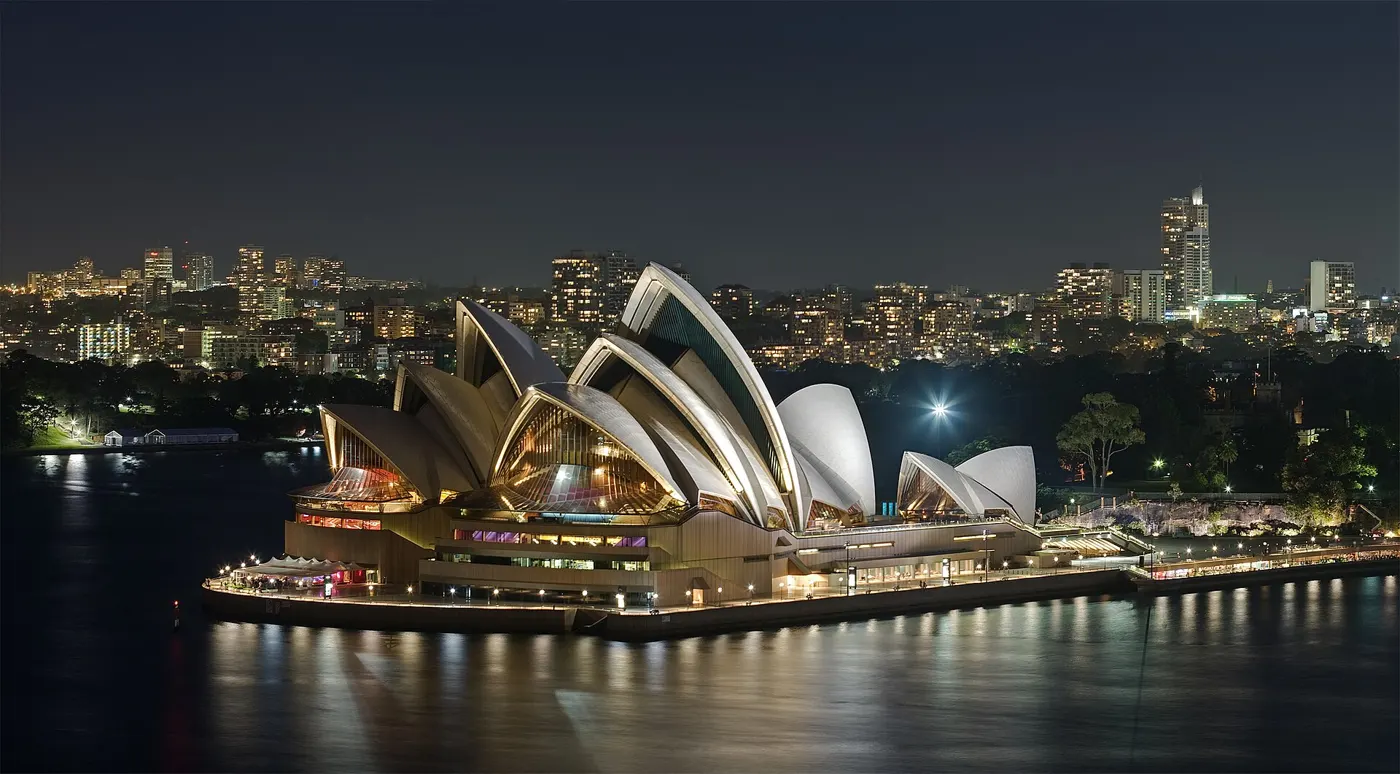
Sydney Opera House and Harbour Bridge on Sydney Harbour
Sydney Opera House and Harbour Bridge. Totality on 22 July 2028 will happen with the Sun low in the north-north-west. Photo: Diliff, CC BY-SA 3.0, via Wikimedia Commons.
Sydney eclipse 2028 time

Exact eclipse times in Sydney

All times below are AEST (UTC+10) for central Sydney on Saturday 22 July 2028. During totality the Sun will be about 29° above the north-north-west horizon.

PhaseTime (AEST)What you’ll see
Partial eclipse begins (C1)12:40:46 pmThe Moon starts covering the Sun. Put your glasses on.
Totality begins (C2)1:59:37 pmDiamond ring, then darkness. Glasses off once totality is complete.
Maximum eclipse2:01:31 pmThe corona, planets and bright stars appear in the middle of the day.
Totality ends (C3)2:03:25 pmSecond diamond ring. Glasses back on.
Partial eclipse ends (C4)3:14:43 pmThe Moon moves off the Sun.
3m 48s
of totality in the CBD
29°
Sun altitude, NNW
1857
the last total eclipse over Sydney
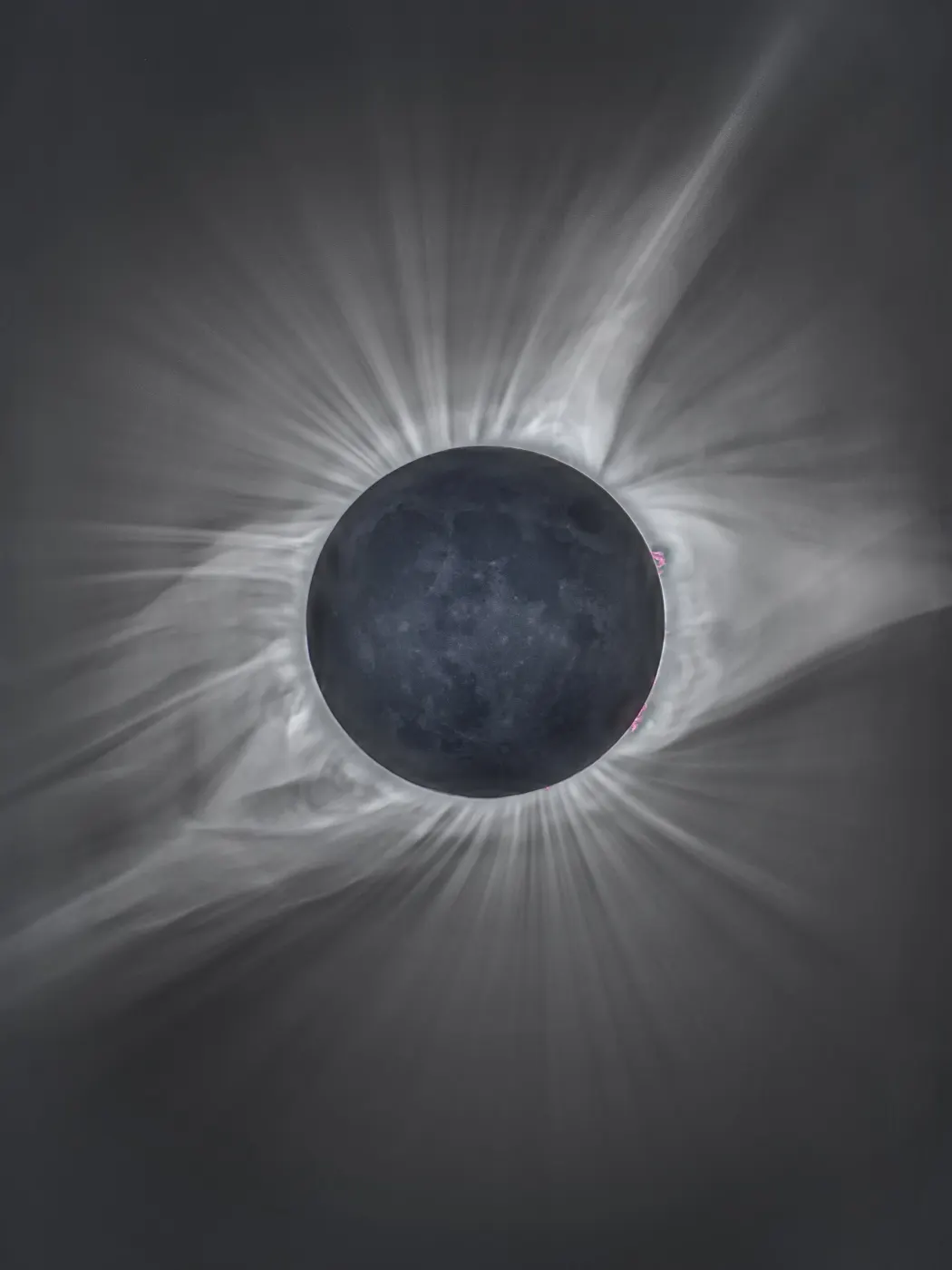
Solar corona visible during a total solar eclipse
The solar corona during totality (photo from the 21 August 2017 eclipse, USA). Photo: Michael S Adler, CC BY-SA 4.0, via Wikimedia Commons.

Sources: timeanddate.com (begins 12:40 pm, max 2:01 pm, ends 3:14 pm, totality 3 m 49 s). Contact times are from NASA/Espenak elements via Eclipse Seconds, cross-checked with AAQ (Xavier Jubier data). Published sources differ by a few seconds.

Where to watch

Where to watch the eclipse in Sydney

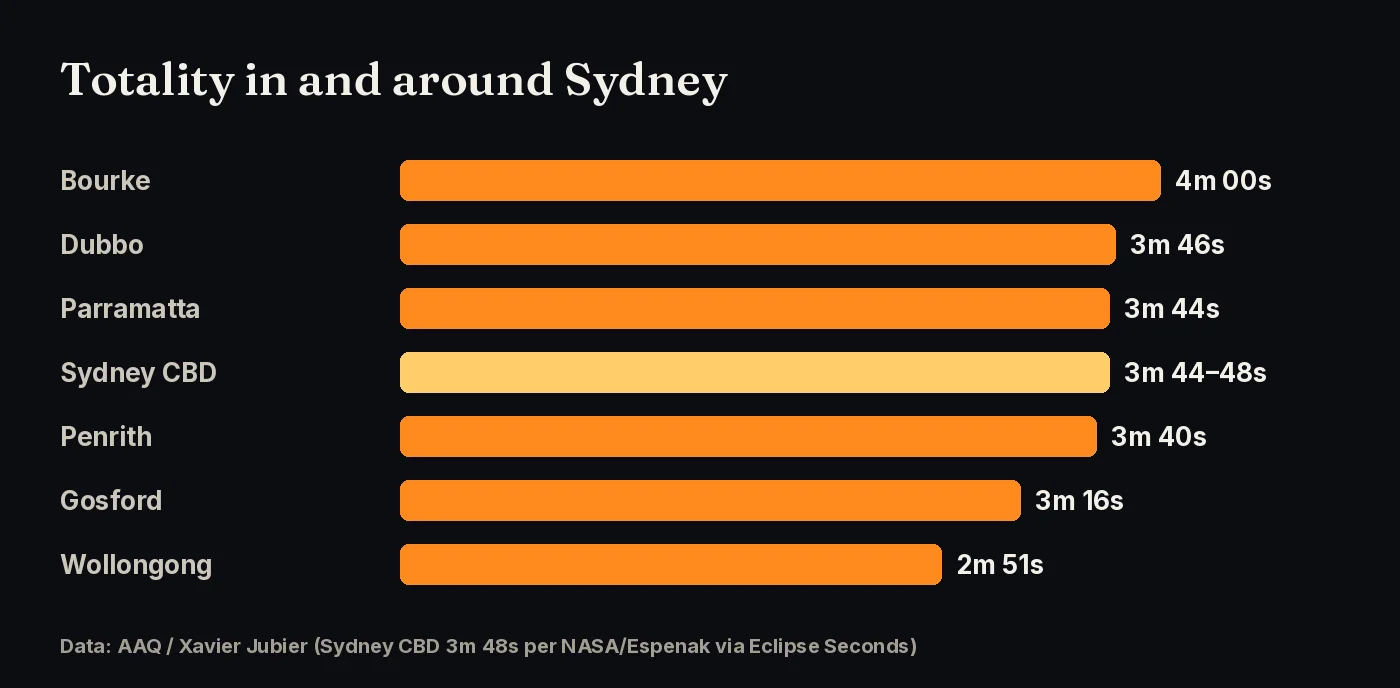
Greater Sydney is inside the path of totality, but close to its southern edge. Totality gets longer to the north-west and shorter to the south: Wollongong has only about 2 m 51 s. Wherever you watch from, you need a clear, low view to the north-north-west.
The Rocks

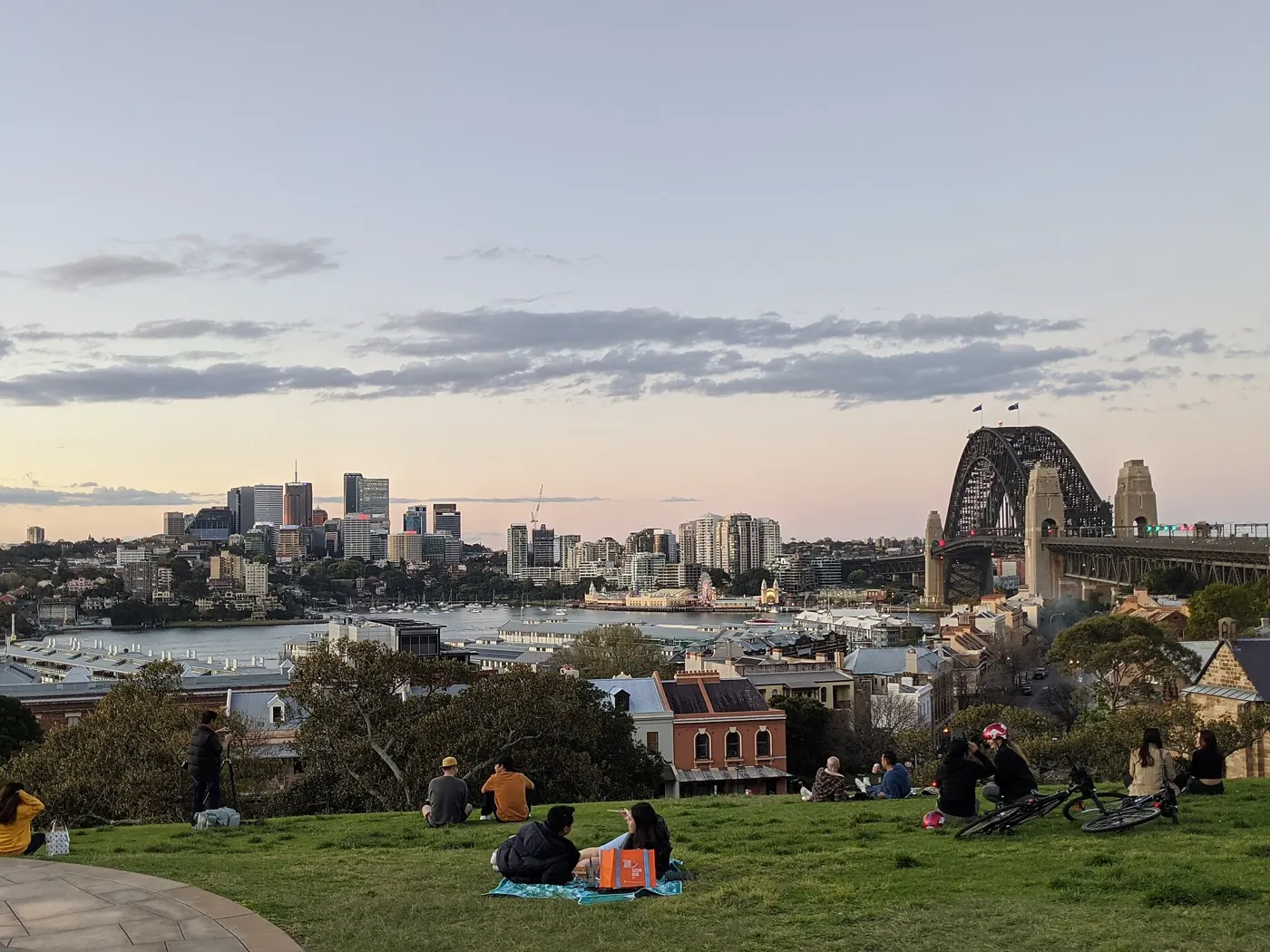
Observatory Hill

High ground above the harbour with an open north-west sky over the Harbour Bridge.
McMahons Point

Blues Point Reserve

Harbourside lawn on the north shore. Look up the harbour to the west-north-west.
Barangaroo

Barangaroo Reserve

Headland park facing west across the harbour.
Royal Botanic Garden

Mrs Macquarie’s Chair

Opera House and Bridge backdrop. Check that trees and buildings don’t block the low north-west Sun.
Parramatta

Parramatta Park

Big open parkland in Western Sydney, about 3 m 44 s of totality.
Penrith & beyond

Blue Mountains lookouts

Get away from coastal cloud. Penrith has about 3 m 40 s.
Observatory Hill park and Sydney Observatory in The Rocks
Observatory Hill, The Rocks. Photo: MDRX, CC BY-SA 4.0, via Wikimedia Commons.
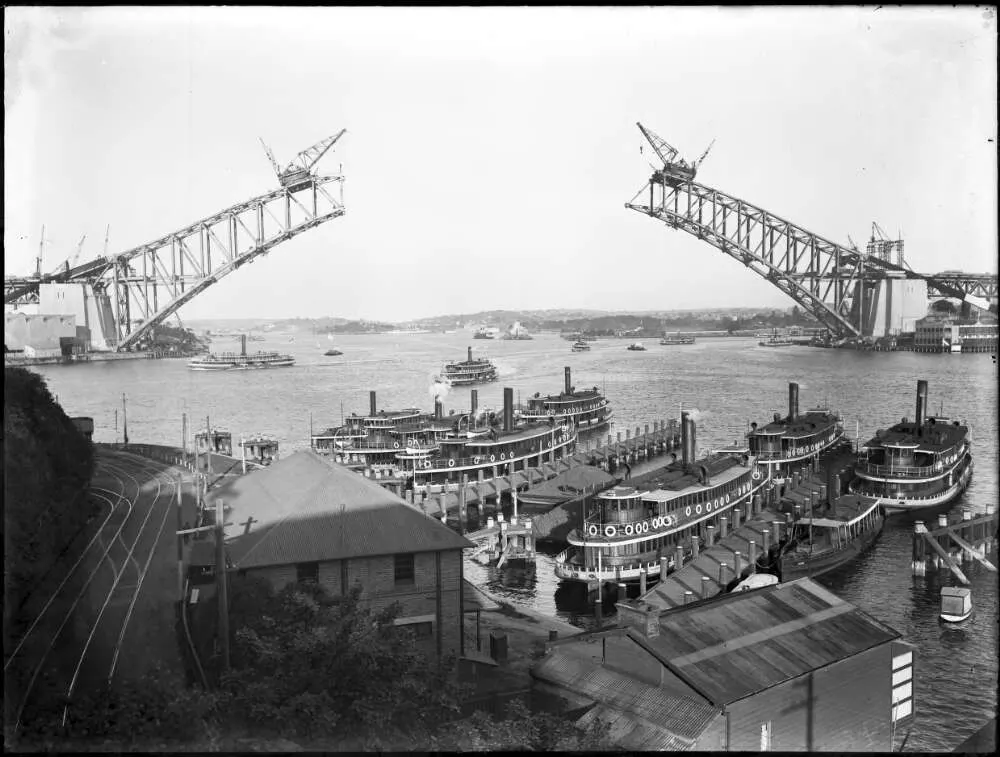
Sydney Harbour Bridge seen from McMahons Point
McMahons Point on the north shore (historic photo taken while the Harbour Bridge was being built). Photo: Foster, A. G., Public domain, via Wikimedia Commons.
Bar chart of totality durations at Bourke, Dubbo, Parramatta, Sydney, Penrith, Gosford and Wollongong
Bar chart of totality durations at Bourke, Dubbo, Parramatta, Sydney, Penrith, Gosford and Wollongong. Diagram: Australasia Eclipse. Data: AAQ / Xavier Jubier (Sydney CBD 3m 48s per NASA/Espenak via Eclipse Seconds).

Sources: AAQ (Xavier Jubier data); Eclipse Seconds (NASA/Espenak elements).

Weather

Sydney weather odds in July

Sydney is in winter in July, with mild afternoons. Since 2000, 22 July in Sydney has been cloudy about 43% of the time. AAQ, using Jay Anderson’s satellite cloud climatology, notes that cloud cover increases toward the east coast and is lowest in north-western Australia. Have a plan B: inland NSW along the path, through Dubbo and Bourke, gives you a chance of clearer skies and longer totality. Look at the forecast 2–3 days ahead and be ready to drive.

Sources: timeanddate.com (cloud history); AAQ (Xavier Jubier data).

Safety

How to watch safely

Eclipse glasses for every partial phase. Use ISO 12312-2 certified eclipse glasses or a solar viewer from 12:40 pm until totality, and again after 2:03 pm. Sunglasses are never safe. Cameras and binoculars need their own certified solar filters.

Glasses off only during totality. Take them off once the last bright beads of sunlight have gone. Put them back on as soon as the diamond ring appears.

Sources: AAQ (Xavier Jubier data)

Getting there

Getting to Sydney for the eclipse

22 July 2028 is a Saturday, so book accommodation early. On the day, take trains, ferries or light rail to the harbour instead of driving, and be in position before 12:40 pm. Most international visitors need an eVisitor or ETA. Check the Department of Home Affairs website for your passport.

Image credits
Questions

FAQ

The partial phase starts at 12:40 pm AEST. Totality runs from about 1:59:37 to 2:03:25 pm, and the partial phase ends at 3:14 pm.
About 3 minutes 48 seconds in the CBD (timeanddate.com: 3 m 49 s; AAQ: 3 m 44 s). It is longer to the north-west and shorter to the south.
Anywhere with a clear, low view to the north-north-west, such as Observatory Hill, Blues Point Reserve, Barangaroo Reserve or Parramatta Park.
Since 2000, 22 July has been cloudy about 43% of the time (timeanddate.com).
1857, which was 171 years before 2028.
More 2028 guides
KimberleyOutbackNew ZealandNext eclipse in AustraliaPhotographing totalityPath map
Find your place in the shadow

Where will you stand on 22 July 2028?

Click any point on the path map for exact totality times, and vote for where the community gathers.

Explore the path mapBack to Australasia Eclipse