AUSTRALASIA ECLIPSE 2028
22 July 2028 · Australia & New Zealand

Australasia Eclipse 2028

The Moon’s shadow crosses a continent and an ocean in a single afternoon. The gathering beneath it is being built by the people who show up. Find your place, and help shape it.

00
Days
00
Hours
00
Minutes
00
Seconds

until greatest eclipse over the Kimberley, 22 July 2028 at 10:55 am AWST

Explore the path
Scroll
Path of totality

Find your place in the shadow

The shaded band is where the Sun disappears completely. Only inside it do you get totality; a step outside and you get a partial eclipse. It is dramatic, but not the same event. Click any pin for exact local circumstances, or click anywhere on the map to check a spot and suggest it to the community.

·
·
Path of totality (~230 km wide)
Central line, longest totality
Northern & southern limits
Viewing spots (all inside the path)
Click anywhere on the map for exact local circumstances.
How we’re building this

Co-created, from concept to totality

This isn’t a finished event with a ticket link. It is being shaped in the open: the idea, the place, and the program, all by the community gathering beneath the 2028 eclipse. Here’s where we are, and where you come in.

  1. 01Underway

    Concept

    Why we gather under this eclipse, shaped together with the founding community.

  2. 02Now · your turn

    Location

    Where we gather. You are choosing it right now. Vote and suggest spots on the map above.

  3. 03Next

    Program

    What happens across the days beneath the sky. Ideas open soon.

  4. 042028

    The Gathering

    22 July 2028. Together, in the path of totality.

0 seekers on board 0 votes cast 0 spots suggested 0 ideas shared

Crowdsource the concept

Add your voice

What should this gathering be? A ritual, a talk, a sound, a rule, a moment worth travelling for. The program is being written together, so add yours.

From the community

What people are shaping

The event

One shadow. Two countries.
Five minutes of night at noon.

On 22 July 2028 the Moon’s umbra makes landfall on the Kimberley coast, crosses the Australian continent through the Red Centre and the heart of Sydney, then sweeps the South Island of New Zealand, all in under three hours.

5m 10s
maximum totality, near the Kimberley, one of the longest this century
230 km
width of the Moon’s shadow at greatest eclipse
1857
the last time totality crossed Sydney, 171 years before this one
3m 48s
of darkness over Sydney Harbour at 2:01 pm
The Eclipse Trilogy

Three eclipses. Three summers. One story.

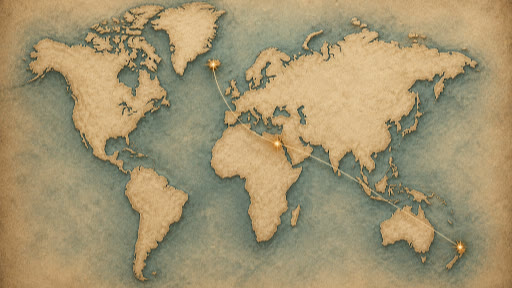
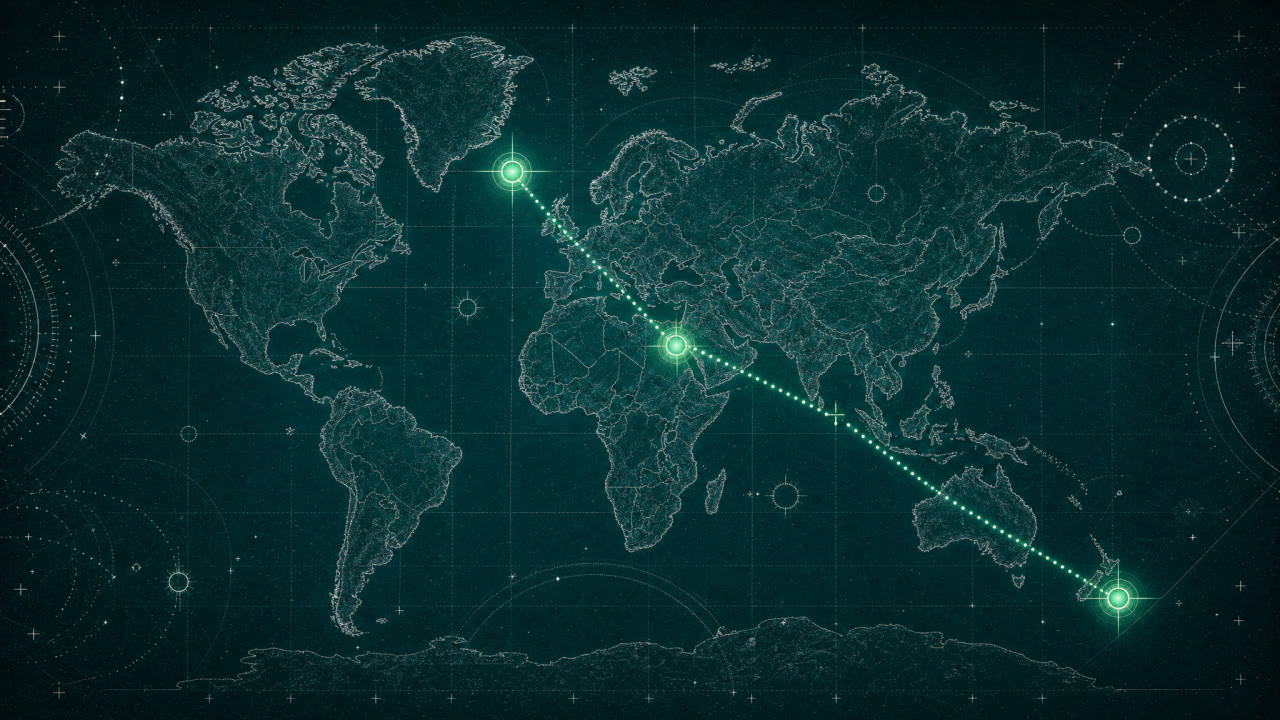
Australasia 2028 closes a rare three-year run of total solar eclipses: the same rhythm, the same season, a different edge of the world each time.

’26

Iceland, the Initiation

August 12, 2026. Iceland beneath totality for the first time since 1954. Not again until 2196.

Iceland Eclipse →
’27

Egypt, the Activation

August 2, 2027. Six minutes and twenty-three seconds, the longest totality remaining this century.

Egypt Eclipse →
’28

Australasia, the Ascension

July 22, 2028. From the Kimberley through Sydney to Fiordland, the trilogy ends where cosmological memory began.

Explore the path →
From the journal

Blog

The Eclipse Trilogy
Feature

The Eclipse Trilogy

Three total solar eclipses. Three successive summers. Why this window is rare, and why continuity changes everything.

Read the full article →
The Future of Celestial Gatherings
Feature

The Future of Celestial Gatherings

Gathering at the edge of the world as rehearsal for interplanetary civilization.

Read the full article →
The Opportunity in Totality
Feature

The Opportunity in Totality

Realigning human civilization with the cosmos, from Stonehenge to Snæfellsnes.

Read the full article →
Good to know

FAQ

Answers to the questions eclipse Seekers ask most: visas, kids, cameras, cruise ships, and why you really do need to be inside the path.

Saturday, 22 July 2028. The Moon’s shadow makes landfall on the Kimberley coast of Western Australia around 11:00 am AWST, crosses the continent through the Red Centre, reaches Sydney at 2:01 pm AEST, and sweeps New Zealand’s South Island around 4:15 pm NZST, all in under three hours. Use the map above to get the exact second for any point.
Yes, and this is the one thing veterans wish someone had told them. A 98% partial eclipse is not 98% of the experience; it’s a slightly dim afternoon. Only inside the ~230 km-wide path does the Sun fully vanish: stars appear at midday, the horizon glows 360° like sunset, the temperature drops, and the corona hangs visibly in the sky. That’s why every pin on our map sits inside the path.
It depends where you stand. The maximum is 5 minutes 10 seconds near the Kimberley, one of the longest totalities of the century. Devils Marbles gets ~4m 55s, Dubbo ~3m 49s, Sydney Harbour ~3m 48s, and New Zealand’s South Island 2½–3 minutes with a dramatic low winter Sun. Duration falls off toward the path edges, so aim for the central line.
The last total solar eclipse over Sydney was in 1857, 171 years before this one. On eclipse day the entire harbour, CBD, Royal Botanic Garden and Opera House sit inside the path, with totality at 2:01 pm and the Sun 29° above the north-western sky. It will likely be the most-witnessed totality in Australian history.
Absolutely, with one rule. During all partial phases you must use ISO 12312-2 certified eclipse glasses (sunglasses are never enough). During totality itself, glasses come off, the corona is about as bright as the full Moon and completely safe with the naked eye. Kids handle it brilliantly; rehearse the “glasses on / glasses off” moment beforehand, and order glasses early, they sell out continent-wide in the final weeks.
If this is your first totality, seriously consider not photographing it, the minutes go faster than you can imagine. If you must: you need a certified solar filter for every partial phase (for the lens, not just your eyes), a tripod, and a rehearsed plan for removing the filter at second contact. A phone on a small tripod shooting wide video captures the darkness, the horizon glow and the crowd reaction, often the best souvenir with the least fuss.
July is the dry season across northern and central Australia, historical clear-sky odds run ~85–90% in the Kimberley and the Red Centre, among the best anywhere on the path. Outback NSW runs ~75%. Sydney in winter is closer to a coin flip (~50%). New Zealand’s South Island is the riskiest and the most beautiful: Fiordland is one of the wettest places on Earth, though a mountain vantage above the cloud deck can save the day.
Most visitors need only an electronic travel authority: Australia’s eVisitor / ETA and New Zealand’s NZeTA are typically granted online in minutes to days for US, UK, EU, Canadian, Japanese and many other passports. If you’re doing both countries (many Seekers are), sort both before you fly. Check the official government sites for your nationality well ahead of eclipse season.
Yes, the southern winter, and it’s a feature. Outback days are mild (high teens to low 20s °C) with crisp, transparent skies; nights are cold and star-drenched. Sydney winter afternoons average ~17 °C. New Zealand’s South Island will be genuinely alpine-cold with a low golden Sun, pack layers and enjoy totality with snow on the Remarkables.
Yes. The path crosses the Indian Ocean before landfall and the Tasman Sea between Australia and New Zealand, and eclipse cruises position ships on the central line with the freedom to dodge cloud, the trick land-based Seekers envy. The trade-off: a moving deck makes long-lens photography hard. For most people the naked-eye experience from a ship is spectacular.
We calculate them directly from the eclipse’s orbital geometry for any point you click, live in your browser, not scraped or approximated from a nearby city. The calculation uses a ΔT of 70 seconds and is accurate to within a few seconds, so the figures line up with the authoritative published timings for this eclipse.
Get in touch

Reach out

Questions about the path, planning a group trip, press or partnerships? Send a message and we’ll get back to you. Just want event updates? Sign up at the top ↑

Feature
The Eclipse Trilogy

The Eclipse Trilogy

Last week, I wrote about the Ancient Blueprint and how humanity's oldest monuments were built in precise alignment with the cosmos. And how our ancestors understood something we've largely forgotten: that civilization is most powerful when synchronized with larger rhythms.

There is a specific window opening right now that I think demands that same lens.

Total solar eclipses are rarer than most people assume. They don't happen annually, rather, roughly every 18 months somewhere on Earth. For any given location, totality passes once every several centuries. When one arrives, it arrives as an isolated event: a different season, a different hemisphere, a different context from whatever came before or after.

That makes what's happening right now unusual: In 2026, a total solar eclipse crosses Northwestern Europe. In 2027, another totality arrives over Northern Africa. In 2028, a third crosses Australasia. Three total solar eclipses. Three successive years. All arriving in the same window of the calendar. The same rhythm, the same season.

The next time this pattern repeats is not until 2044 to 2046, which is coincidentally the same wait for another eclipse over the United States. What we are inside right now is rare by any measure.

The Celestial Mechanics

To understand why this convergence is unusual, it helps to know something about Saros cycles.

A Saros is a period of approximately 18 years, 11 days, and 8 hours. After one Saros, the Earth, Moon, and Sun return to nearly identical relative geometry, an eclipse occurs again, in the same celestial family as its predecessor. These families, called Saros Series, last 1,200 to 1,500 years, producing 70 to 80 eclipses each.

The 2026 eclipse belongs to Saros 126, born in 1179 CE, now on its 48th appearance of 72, continuing until 2459. When totality crosses Northwestern Europe this August, it is one chapter in a lineage that has been unfolding for nine centuries and will continue for four more.

The three eclipses of this window don't share the same Saros family. They are distinct astronomical lineages arriving in the same concentrated span. That is precisely what makes the convergence rare.

Why Continuity Changes Everything

Eclipses are usually standalone events. Different times and different places means each one exists disconnected from what came before or after. You gather, you witness, you disperse.

This window removes one of those variables.

The same season, arriving year after year, means that some continuity, seen in more traditional gatherings, can return. The same builders, scientists, artists, seekers may reconvene under a different sky, on a different continent, but inside the same story. That rhythm is rare. And rhythm is the precondition for mythology.

One gathering is a spectacle. Three, anchored in time, become something else.

People Are Looking for This

My last piece ended with the shift from materialism to experientialism, a civilization-wide hunger for meaning that transcends the systems we've built.

What I'm seeing is more specific: people are looking for a real hero's journey. Not a metaphor for one. An actual pilgrimage with stakes, with shape, with other humans alongside them. The Trilogy gives that shape. If you witness all three, crossing the same threshold in a different land, three summers in a row, you become part of a story most people will never have the chance to experience in their lifetimes.

Where to see the Three

Iceland 2026 is the Initiation. The threshold, the call, the edge of the known world. On August 12, Iceland will be beneath totality for the first time since 1954. Not again until 2196.

Egypt 2027 is the Activation. On August 2, 2027, the longest remaining total solar eclipse of the 21st century. Six minutes and twenty-three seconds of totality. Not surpassed until 2114. Northern Africa, at the heart of human civilization's oldest story. That duration isn't incidental, it is an entirely different experience of totality. Time enough to feel something shift.

Australasia 2028 is the Ascension. On July 22, 2028, the path of totality crosses Australia from the northwest, through the outback and Sydney, continuing to the south island of New Zealand. To close the trilogy here, in the southern winter, is to end where human cosmological memory arguably began.

Egypt is Next

This Sunday, on the northern summer solstice, we announce Egypt Eclipse 2027.

The timing is not accidental. It was programmed.

egypt-eclipse.com  ·  Read on LinkedIn →
Feature
The Future of Celestial Gatherings

The Future of Celestial Gatherings

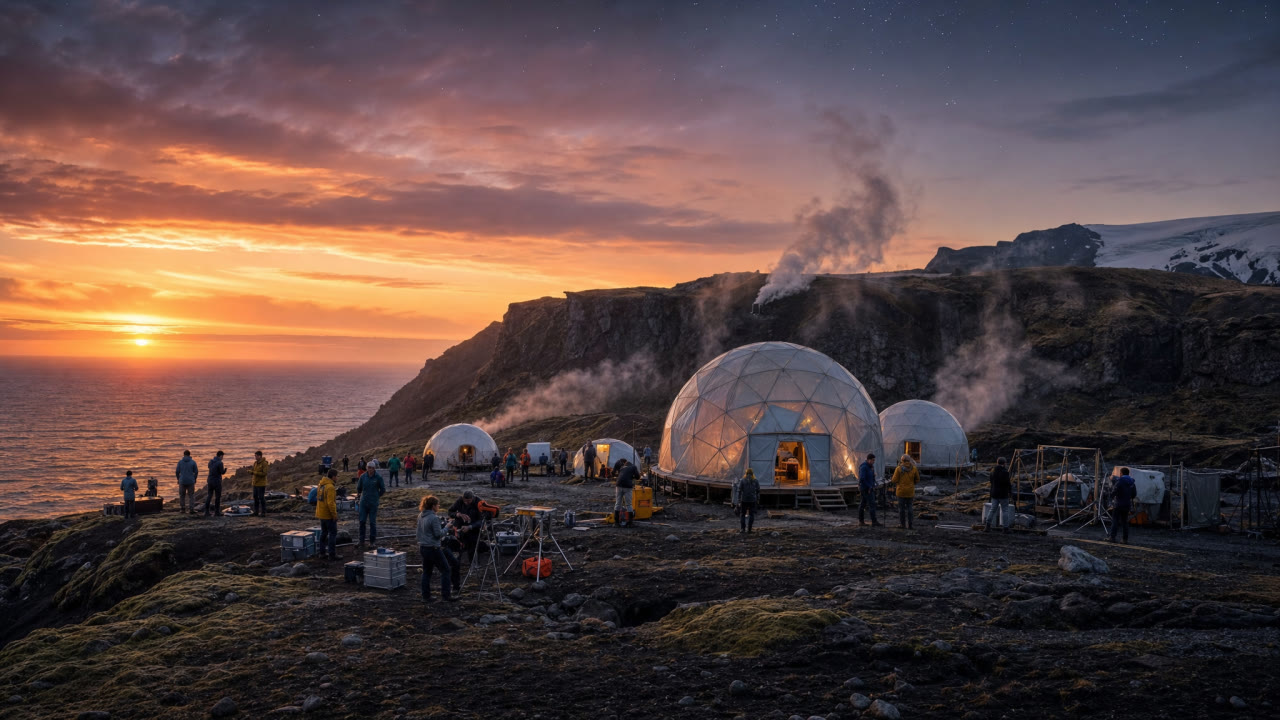
The people gathering at Iceland Eclipse share a common trait: an appetite for the edge.

The volcanic peninsula. The black sand. The glacier Jules Verne evoked on his journey to the center of the Earth. The light that doesn't fully disappear.

People are not just coming for the eclipse. They are coming to the edge of the known world, to be with others who chose the same.

The Real Precedent

Every significant expansion of human civilization was preceded by gatherings at the frontier.

The explorers who mapped the Pacific didn't sail in isolation. They came from ports where knowledge, resources, and resolve had been concentrated. The ancient navigators who crossed the same ocean carried cosmological maps passed down through ceremony, through gathering, through collective memory built together.

The edge requires a social technology that ordinary life doesn't demand: radical trust in strangers, shared purpose under scarcity, the ability to coordinate without hierarchy, a willingness to act without certainty.

These aren't abstract virtues. They're mission-critical capabilities. And they are not built in comfort.

What Remote Gatherings Actually Build

When you bring thousands of people to a volcanic peninsula in Iceland, or to the plateau above Luxor, you are running an operational experiment in civilization.

What does it take to sustain thousands of people in a remote place? How do you maintain coherence when the environment is extreme, the logistics are unforgiving, and the only shared resource is an event in the sky overhead?

Food systems. Water. Energy. Social organization. Medical response. Shared governance. Identity coherence across a multilingual, multi-generational crowd.

Zoomed in, they are festival problems. But zoomed out, in the context of our interplanetary future, they are what our first permanent human outposts off this planet will face.

The difference is that in Iceland, if the system fails, you go home. Off-world, there is no home to return to.

This is why the rehearsal matters. Not as metaphor, rather as practice.

The Astronauts Aren't There by Accident

Iceland Eclipse hosts many astronauts. People who have left this planet, looked back at it from orbit, and returned. And a couple of them are joining us for the full month container.

The perspective of the overview effect is one of the most consistently transformative experiences humans have documented. It describes the dissolution of borders, the fragility of the atmosphere, the recognition that Earth is a single system.

The people building the future of human settlement off-world and the people building the cultural infrastructure of human experience on it need to be in the same rooms. They need to trust each other. They need to know each other's names. That trust is not built through a screen.

Why Now

The frontier doesn't wait for readiness. If you feel called, it's time to suit up and join the mission.

Sign up here: icelandeclipse.com  ·  Read on LinkedIn →
Feature
Realigning Human Civilization with the Cosmos

Realigning Human Civilization with the Cosmos

The Ancient Blueprint

For years we've understood that humanity's oldest monuments, Stonehenge, the pyramids, Angkor Wat, were positioned according to precise celestial alignments. Our ancestors constructed the places in which they lived and celebrated to honor patterns observed within time and space. They understood something we forgot: that human civilization is most powerful when synchronized with larger rhythms.

These weren't primitive people chasing pretty sky events. They were sophisticated designers encoding cosmic intelligence into the foundations of human gathering. They built infrastructure that would serve ceremonial, economic, and social functions for millennia, all anchored to moments when Earth's relationship to the Cosmos created specific energetic conditions.

The Present Convergence

Interest in eclipses is at an all-time high globally. Beyond the commercial possibilities, this represents concentrated economic, creative, and physical energy seeking alignment around something larger than individual gain. Millions of people are actively seeking raw human experience and direct connection with the essence of the universe.

This is not casual interest. This is a civilization-wide hunger for meaning that transcends the systems we've built.

These destination gatherings bring sustained attention and economic energy to new geographies. But most organizers capture this energy for temporary extraction, whether intentional or not, rather than permanent transformation. We're missing the deeper opportunity: to harness this energy to create entirely new nodes of human civilization.

The Design Opportunity

When you build in places without legacy institutional frameworks, you can reimagine spatial design from first principles. You're not retrofitting outdated systems, but creating new ones optimized for how humans actually want to live in the 21st century.

We can forecast these cosmic moments centuries in advance. We can build forward to meet them with intentional communities, experimental governance structures, and new models for how creative and economic energy flows.

Cosmic timing that creates natural gathering points, global interest that generates economic energy, and human readiness to redesign how we live together.

The Mission

Iceland Eclipse happens 11–15 August 2026, at Snæfellsnes and is the first in a trilogy of eclipses over the next three summers, with Egypt 2027 and Australasia 2028 extending the story.

The question isn't whether you're interested in eclipses. It's whether you're ready to participate in the conscious realignment of human civilization with cosmic intelligence.

If you are, reach out. Sign up. Join us in Iceland and beyond.

imxp.org  ·  Read on LinkedIn →